
What Hoarding Cleanup Teams See That the Rest of Us Don't: The Hidden Cost of America's Isolation
As seen in

PHOENIX, AZ — September 2026 — Most people never see the inside of a severely hoarded home.
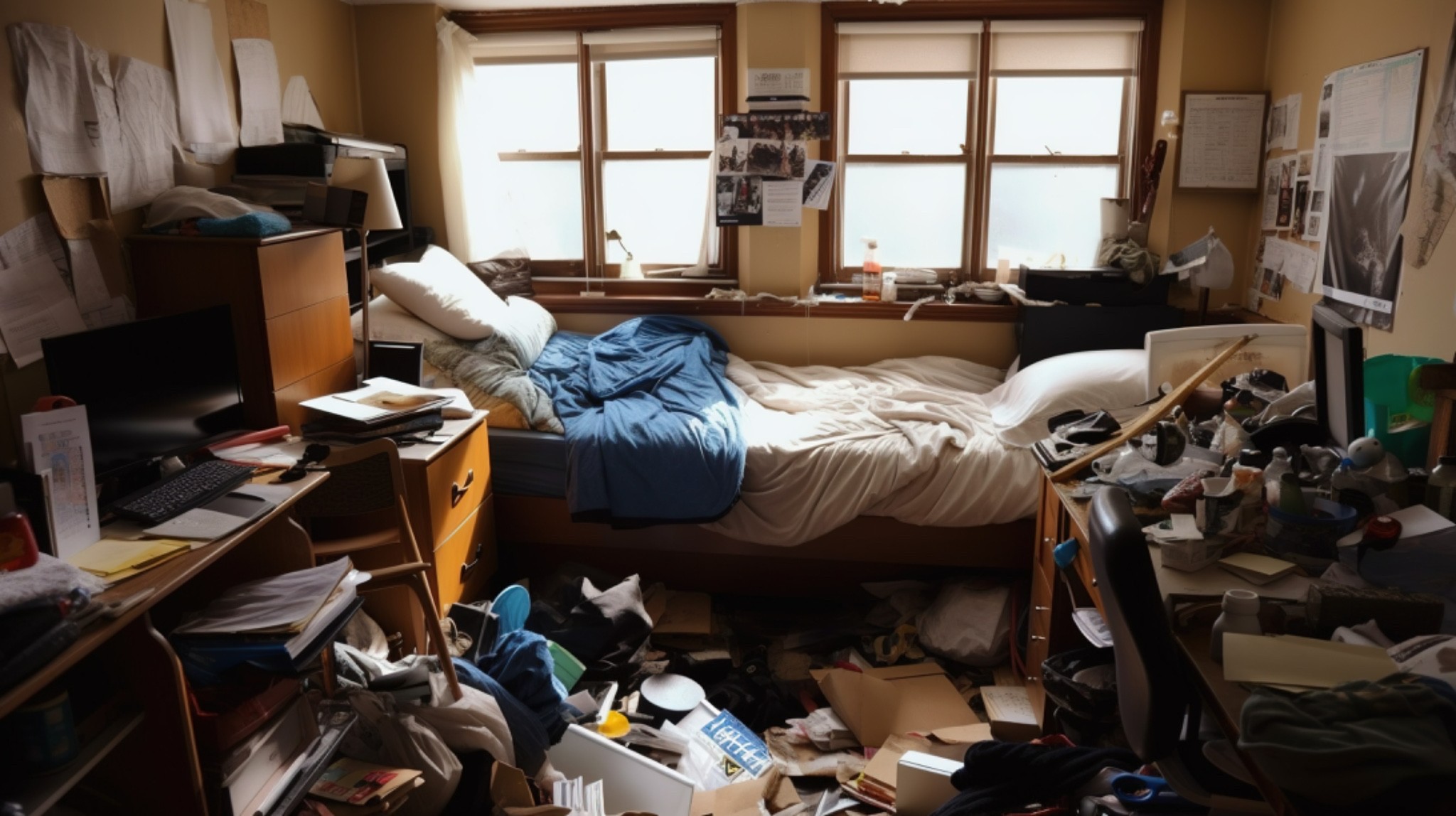
They don't see the rooms that have gradually disappeared beneath years of possessions. They don't see the narrow pathways left between accumulated belongings. They don't see the unopened packages, spoiled food, animal waste, pest infestations or the single usable chair or section of bed that may have become a person's entire living space.
But professional remediation teams do.
For David Lesaffre, founder of T.A.C.T. 48, those homes have changed the way he thinks about hoarding—and about what can happen when a person becomes increasingly disconnected from family, friends and the world outside their front door.
Lesaffre and his family-owned biohazard remediation company were recently profiled in Esquire in an extensive examination of the little-known world of trauma cleaning. The article follows T.A.C.T. 48 teams into homes dealing with suicide, unattended death and severe hoarding, revealing a side of American life most people never encounter.
What the experience has taught Lesaffre is that hoarding is rarely just about having too much stuff.
“There's always a catalyst,” Lesaffre told Esquire.
That catalyst can be a death, divorce, illness, loss of employment, family estrangement or another event that causes someone's life to gradually contract. Over time, the home can begin to reflect that isolation.
When the home becomes the world
The Lesaffres initially had no intention of taking hoarding-cleanup jobs.
When David and his wife, Leanne, trained for the biohazard-remediation industry, they viewed hoarding as too time-consuming, unpleasant and emotionally complicated. But they soon discovered a recurring problem: unattended deaths frequently occurred in homes that were already severely compromised by hoarding.
Cleaning the immediate biohazard wasn't enough.
The blood or biological contamination could be removed, but the family could still be left facing a house filled with years of accumulated belongings, waste and hazardous conditions.
“If you only cleaned up the deaths covered by insurance,” the Lesaffres came to realize, “you'd inevitably end up leaving families to clean the filth and chaos that remained after the blood was gone,” according to Esquire.
So T.A.C.T. 48 began taking on hoarding work as well.
Today, the company approaches these jobs as something considerably more complicated than simply filling dumpsters.
“At some point, you're not just cleaning a house,” says Lesaffre. “You're helping somebody get their life back.”

A home can tell a story no one else has seen
In a typical decluttering project, the objective might be straightforward: decide what stays, what goes and what can be donated.
Severe hoarding is different.
T.A.C.T. teams can encounter environments where normal living functions have gradually disappeared. The company's technicians may have to navigate contamination from rodents, waste, spoiled food, mold or other biohazards while working with families to determine what can safely be retained.
T.A.C.T. describes its approach as restoring safety while treating clients with patience, compassion and confidentiality. Its technicians are trained to deal with biohazards, pest contamination, mold, waste and other hazards that can accompany severe hoarding conditions.
But physical work is only one part of the challenge.
“Every object has a story to the person who owns it,” Lesaffre says. “If you don't understand that, you can make a difficult situation much harder.”
That is why T.A.C.T. often encourages family members to participate in the sorting process when they are able.
The goal isn't simply to remove everything.
It is to help establish a safe, usable environment without treating the person who lives there as a problem that needs to be removed.
The loneliness behind the clutter
Hoarding is not new. Historical accounts of extreme hoarding go back centuries, and the condition has been formally recognized as a psychiatric disorder in the United States only relatively recently.
What has changed, Lesaffre believes, is the environment in which isolation can develop.
A person can live alone, order almost anything they need online, have food delivered to their door and go for long periods without anyone seeing the condition of their home.
By the time a family member, neighbor, landlord or emergency responder realizes there is a serious problem, the physical environment may have deteriorated dramatically.
The home can become both a symptom and a barrier to reconnecting with the outside world.
For remediation professionals, the evidence can be remarkably visible.
In one case documented by Esquire, T.A.C.T. encountered a home where a 40-pound bag of dog food had attracted more than 150 rats. In another, the practical challenge of reclaiming the house involved family members working through years of possessions, deciding what should be kept, discarded or donated.
These aren't simply cleaning problems.
They are often human problems that have become physical problems.
Why shame can make the problem worse
One of the biggest obstacles T.A.C.T. encounters isn't necessarily the amount of material inside a home.
It is shame.
People who are embarrassed by the condition of their home may stop inviting people over. They may avoid family. They may become reluctant to seek help. And the longer that continues, the more difficult the eventual intervention can become.
That creates a cycle:
Isolation can contribute to deterioration. Deterioration can create shame. Shame can lead to further isolation.
Breaking that cycle requires more than a cleaning crew.
It requires an approach that allows someone to accept help without feeling judged.
“People don't need to be told that they've failed,” says Lesaffre. “They need someone willing to help them take the next step.”
The turning point often comes after a crisis
Ironically, T.A.C.T.'s teams often enter these homes because something else has happened first.
An unattended death.
A medical emergency.
A fall.
A pest infestation.
A family intervention.
A landlord discovering that a property has become unsafe.
The crisis forces the situation into the open.
That can make the cleanup company one of the first outside organizations to see the reality of what has been happening inside the home.
T.A.C.T. believes that moment should be handled carefully.
The company provides 24/7 emergency biohazard and hoarding remediation throughout Arizona and now in the Dallas-Fort Worth Metroplex and works with families and insurance providers to help navigate the practical side of the process. Its technicians are trained to safely address biological contamination and other hazards while helping return the property to a safe environment.
The lesson isn't “clean your house”
For Lesaffre, the larger lesson from years of trauma and hoarding remediation isn't that people need to keep their homes cleaner.
It is that a deteriorating home can sometimes be an outward sign that a person has been struggling long before anyone noticed.
And by the time someone finally calls for professional help, the problem may have little to do with housekeeping.
It may involve grief.
It may involve isolation.
It may involve aging.
It may involve a family that hasn't spoken in years.
Or it may simply be the cumulative effect of a person losing the ability to manage the life they once could.
“The house is what we see,” says Lesaffre. “But there's usually a much bigger story behind it.”
That, he says, is why the job demands something beyond technical expertise.
“You have to remember that you're working in someone's life, not just someone's house.”
About T.A.C.T. 48
T.A.C.T. 48 (Trauma And Casualty Team) provides 24/7 emergency biohazard, trauma, crime-scene, unattended-death and hoarding remediation services throughout Arizona. The company specializes in helping families, businesses and property owners safely recover from situations involving biohazards, traumatic events and severely compromised living environments.
T.A.C.T. 48 is licensed, insured and certified, works with insurance providers and emphasizes discreet, compassionate service during difficult circumstances. Calls are answered by an owner or manager rather than a call center.
For more information, visit T.A.C.T. 48 or explore trauma and biohazard remediation services in Fort Worth, or contact the company for a confidential consultation.
Latest news

Read how T.A.C.T. 48 / AZ / Ft Worth's relentless hard work and innovative strategies have led them to be highlighted in a prestigious Esquire Magazine article.
Read More
Following Esquire's recent look inside the world of trauma remediation, T.A.C.T. 48 founder David Lesaffre says the homes his teams enter reveal a deeper problem: what can happen when isolation, loss and disconnection accumulate behind closed doors.
Read More
Explore our blog's latest insights from July's Chronicles, featuring stories on who cleans up after the police leave, a day-in-the-life of our techinician and where does biohazardous waste go.
Read More